
1. Home
  2. Solution
  3. Secondary & End-of-Line Packaging Solutions
  4. Layer-Forming Case Packing Solution

Secondary & End-of-Line Packaging Solutions

Layer-Forming Case Packing Solution

What Is Layer-Forming Case Packing Solution?

A layer-forming case packing solution groups finished primary or retail packages into complete layers before loading them into corrugated shipping cases.
The process usually follows this sequence:
-  Finished packages arrive from the upstream machine. 
-  Products are spaced and oriented. 
-  The required number of products is counted. 
-  Products are arranged into a row. 
-  Several rows are combined into one layer. 
-  One or more layers are stacked or loaded sequentially. 
-  The complete pattern is transferred into the case. 
-  The loaded case is closed and sent to palletizing. 
The required arrangement may be expressed as:
-  Products per row 
-  Rows per layer 
-  Layers per case 
-  Product orientation 
-  Alternating direction between rows or layers 
For example, a case may contain four bags per row, three rows per layer, and two layers. Another case may require cartons to alternate orientation so the available space is used more efficiently.
The main challenge is preserving the product pattern during transfer.
Flexible bags can change shape as the contents settle. Pouches may have uneven tops or zippers. Printed cartons may be damaged by excessive pushing force. Trays may bend if they are unsupported.
The layer-forming and loading mechanism must therefore match the actual package structure and case clearance.
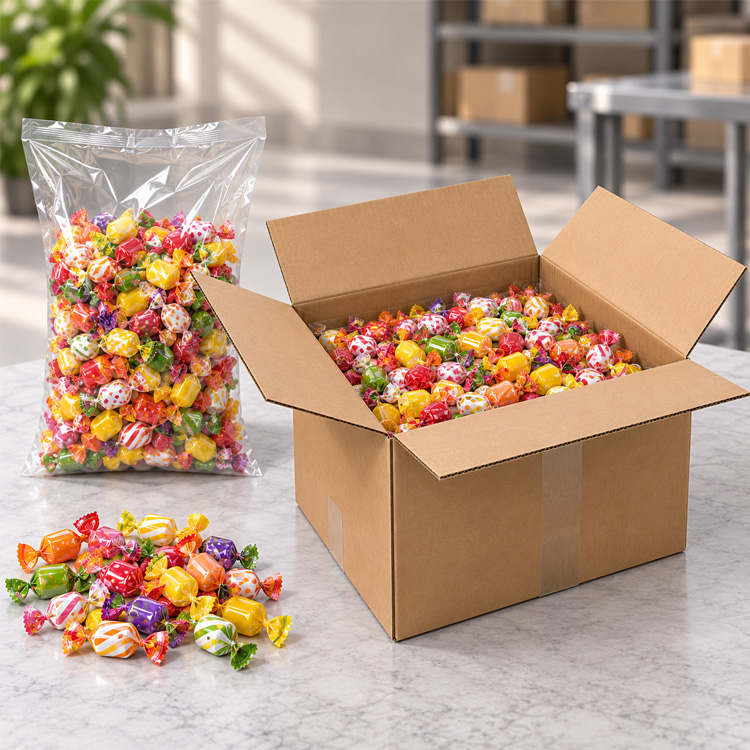
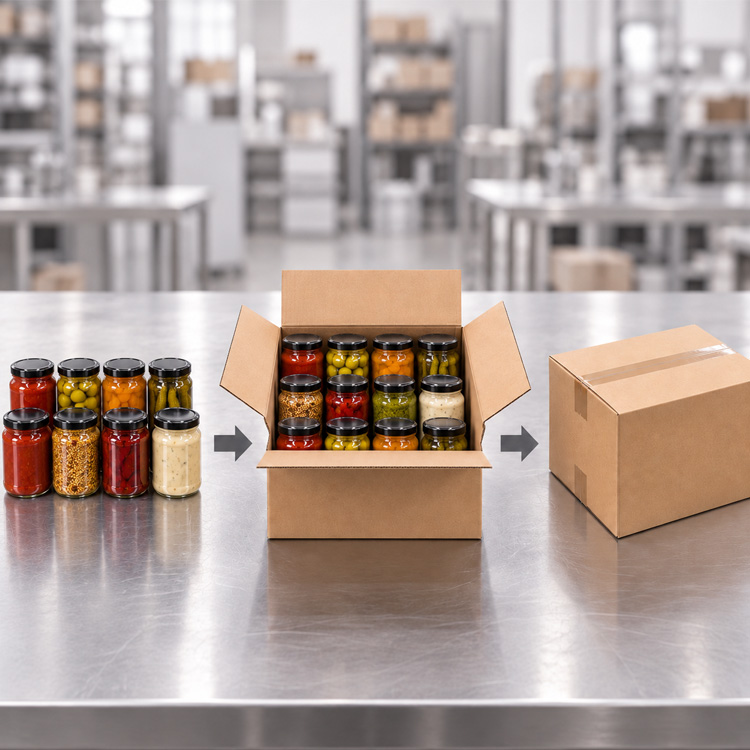
 

Soontrue-Group-Layer-Forming-Case-Packing-Solution


How to Choose the Right Layer-Forming Case Packing Solution?

The correct solution is determined by the relationship between the package dimensions, layer pattern, case size, and required output.
Manufacturers should consider:
-  Primary package type 
-  Package dimensions and weight 
-  Package rigidity or flexibility 
-  Product distribution inside the package 
-  Seal, zipper, spout, or closure position 
-  Incoming package orientation 
-  Products per row 
-  Rows per layer 
-  Layers per case 
-  Required alternating pattern 
-  Side loading or top loading 
-  Case internal dimensions 
-  Corrugated board strength 
-  Required cases per minute 
-  Upstream packaging-machine speed 
-  Accumulation requirements 
-  Number of case formats 
-  Changeover frequency 
-  Inspection requirements 
-  Pallet pattern 
-  Factory floor space and height 
A rigid carton with a fixed pattern may be suitable for high-speed mechanical layer formation and side loading. A flexible stand-up pouch may require more support and top loading. Fragile trays may require robotic transfer with controlled acceleration.
Case dimensions should be confirmed using actual filled packages. Empty package drawings do not show product settling, trapped air, bulging, or the dimensional variation that occurs during production.



Layer-Forming Case Packing Solution Video

Watch how finished packages are accumulated, counted, turned, arranged into rows, formed into layers, and transferred into corrugated shipping cases.
The video can show package infeed, orientation, row formation, layer stacking, case erection, side loading, top loading, case inspection, palletizing, and stretch wrapping.
The final configuration depends on package type, products per row, rows per layer, layers per case, case dimensions, line speed, and installation space.

{{item.title}}

  • {{item.title}}

VideoCover

SOLUTION MACHINE

Machines Included in Layer-Forming Case Packing Solution

The equipment is selected around the required case pattern and the behavior of the filled package during grouping and transfer. 


Finished-Package Infeed Conveyor
The infeed conveyor receives bags, pouches, cartons, trays, or wrapped products from upstream packaging equipment.
The system controls product spacing and transfers packages into the orientation and counting section.
Conveyor design depends on package stability:
-  Soft bags need continuous support. 
-  Stand-up pouches may require side guidance. 
-  Cartons need controlled contact pressure. 
-  Trays may require low-impact transfers. 
-  Products with slippery film need accurate stopping and positioning. 


Product Accumulation System
Accumulation provides a temporary buffer between the upstream packaging machine and the cyclic case packing process.
It allows products to continue arriving while one layer is being loaded or a new corrugated case is entering the loading position.
The buffer capacity should match the actual production rate and expected short interruptions.
Excessive contact pressure should be avoided where packages can deform or printed surfaces can become scratched.


Product Turning and Orientation System
Products may need to be rotated before row formation.
Orientation can improve case utilization, protect package seals, keep printed panels facing the required direction, or create an interlocked arrangement.
Selected packages may be turned by 90 or 180 degrees according to the approved recipe.
The orientation system must complete the movement without disturbing upstream spacing or damaging the package.


Product Counting System
The counting system controls how many products enter each row and layer.
Sensors monitor incoming packages and release the required quantity to the row-forming station.
The control logic should prevent incomplete rows from being loaded into the case.
Additional weight or vision verification may be included where greater confirmation is required.


Row Formation System
Products are aligned side by side or end to end to create one complete row.
The mechanism may use belts, stops, pushers, guides, or servo-controlled positioning.
The row width and orientation must match the case opening and the required final arrangement.
Flexible packages may need additional guides to maintain their shape during row formation.


Layer Formation System
Several rows are combined into one complete layer.
The products may be arranged in the same direction or in an alternating pattern.
The layer formation platform supports the group until it is ready for loading. The system must keep the layer square and prevent gaps from developing between products.
For soft bags, limited compression may be used to create a compact and stable layer, but the pressure should not damage seals or product appearance.


Layer Stacking System
Where several layers are required, products can be stacked before loading or loaded into the case one layer at a time.
The selected method depends on product strength, case direction, loading space, and required output.
A layer pad may be inserted between layers when separation, friction, or additional support is required.


Automatic Case Erector
The case erector opens flat corrugated blanks, folds the bottom flaps, and prepares each case for loading.
The erected case must remain square because the layer dimensions are usually closely matched to the internal case size.
Inconsistent or distorted cases can create resistance during layer transfer.


Side-Load Case Packing System
In side-load case packing, the prepared layer or complete multi-layer group is pushed horizontally into the open case.
This method is suitable for stable product groups and regular case patterns.
The loading plate, case opening, and product group must remain accurately aligned. Excessive loading resistance may damage bags, cartons, or case panels.


Top-Load Layer Packing System
In top-load packing, prepared rows or layers are placed into an open case from above.
This method is useful for products that should not be pushed horizontally or that need to maintain an upright orientation.
Mechanical or robotic transfer may be used depending on product weight, layer stability, and required speed.


Case Closing and Inspection System
After loading, the case flaps are folded and the case is prepared for sealing.
A case that does not meet the defined conditions can be rejected or stopped for operator inspection.


Palletizing System
Completed cases can be coded, palletized, stretch wrapped, and labeled automatically.
The pallet pattern should consider case dimensions, case strength, internal product arrangement, finished pallet height, and transportation requirements.

WHAT PACKAGING SOLUTIONS ARE AVAILABLE FOR BREAD & BAKERY?

Packaging Formats for Layer-Forming Case Packing

The system can create several case-loading structures according to the primary package and the required shipping pattern.

  • Box and Case Packaging

    Box and Case Packaging

FAQ

Layer-Forming Case Packing Solution FAQs

Q1: What is the difference between layer-forming case packing and robotic case packing?

Layer-forming case packing prepares complete rows or layers before transferring them into the case. Robotic case packing typically picks individual products or smaller groups. Layer formation is often suitable for stable products and fixed repeatable patterns, while robotic handling offers greater flexibility.

Q2: What products can use layer-forming case packing?

Suitable products may include flexible bags, premade pouches, retail cartons, flow-wrapped packs, trays, tissue packs, bundles, and other finished packages that can be arranged into stable rows and layers.

Q3: Can flexible bags be arranged into accurate layers?

Yes, but the design must consider fill level, trapped air, product settling, bag dimensions, surface friction, and seal position. Flattening, side guidance, or controlled compression may be required.

Q4: Can the system produce different case patterns?

Approved patterns can be stored as recipes. Mechanical adjustments, guide repositioning, format parts, or programming changes may be required when package and case dimensions change.

Q5: Can layer pads be inserted between product layers?

Yes. Layer-pad insertion can be added when the product requires separation, increased friction, weight distribution, or additional protection.

Q6: How is an incomplete layer prevented from entering the case?

Product sensors and counting logic monitor the row and layer formation process. The loading cycle begins only after the required group has been completed.

Q7: Can the line connect directly with several upstream packaging machines?

Yes, subject to output balancing, conveyor routing, product identification, accumulation capacity, and the required combined case-packing rate.

Q8: What information is needed before designing the solution?

Useful information includes filled package samples, package dimensions and weight, discharge direction, upstream speed, products per row, rows per layer, layers per case, case drawings and samples, required loading direction, case output, SKU list, changeover expectations, pallet specifications, and factory layout.

CONTACT

Please fill in the necessary information in the table below and click the send button. After confirming the content, the responsible person will reply.